
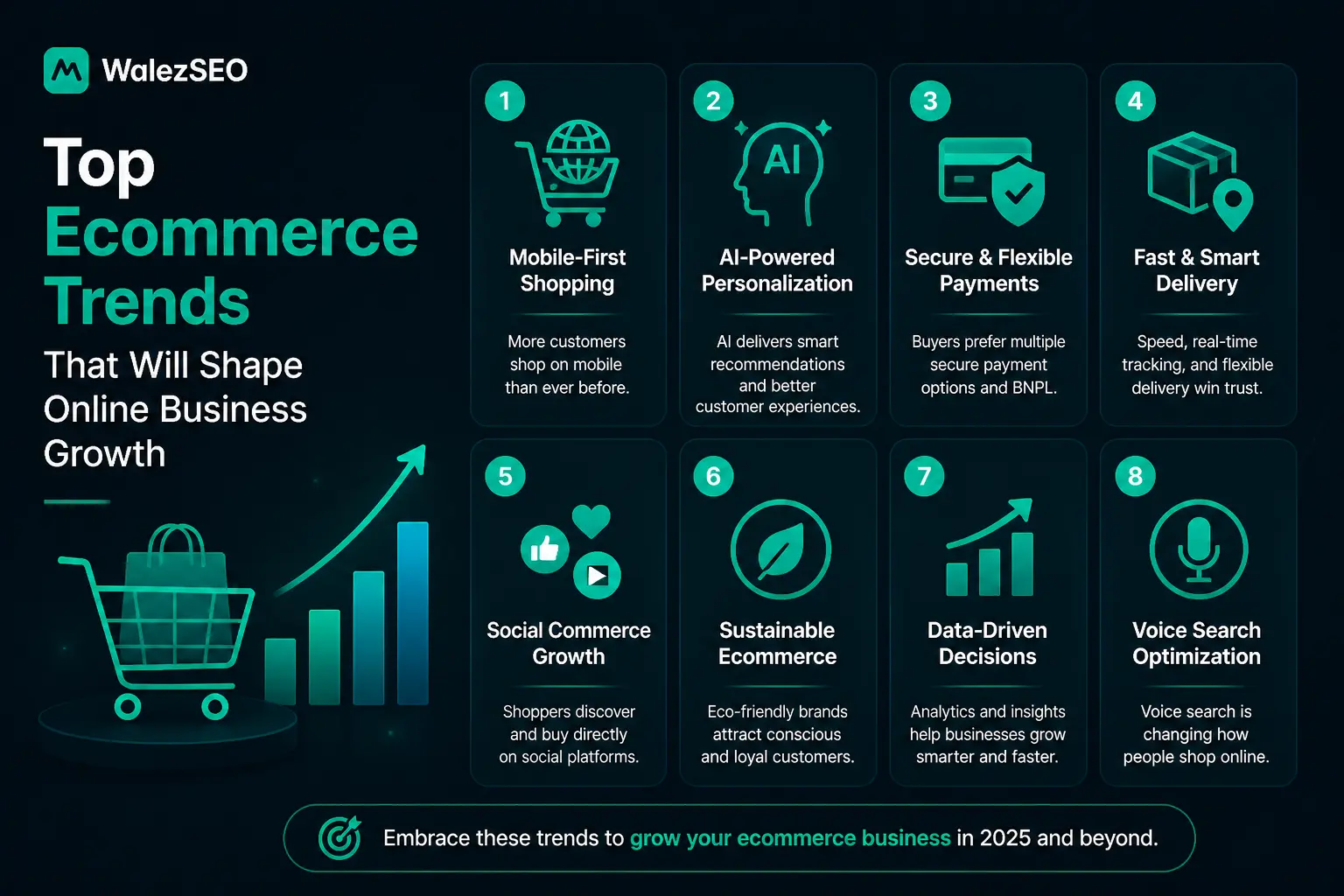
Ecommerce is changing faster than ever in 2026. Online shopping is no longer just about websites and keywords. It is now driven by AI, user experience, and real time personalization.
Businesses that fail to adapt will lose visibility and sales. Platforms like Google are moving toward answer based search instead of simple rankings.
Customers now expect faster, smarter, and more personalized shopping. This shift is changing how stores attract traffic and convert buyers.
In this guide, you will learn the most important ecommerce trends shaping 2026. Each trend will help you understand where online business is heading.
AI Powered Shopping is Reshaping Ecommerce
Artificial intelligence is now at the center of ecommerce growth. It is changing how people search, compare, and buy products.
AI shopping assistants help users find the right product instantly. They analyze behavior, preferences, and intent in real time.
Search engines like Microsoft Bing are already using AI driven results. This reduces traditional browsing and increases direct recommendations.
For ecommerce stores, this means product pages must be clearer. AI systems need structured and accurate information to recommend your products. Stores that adapt to AI search will gain a strong advantage in 2026.
Zero Click Shopping and Instant Answers
Zero click shopping is becoming more common. Users get answers directly on search pages without visiting websites.
This happens through product panels, snippets, and AI summaries. It reduces traditional website traffic but increases competition for visibility.
To stay visible, ecommerce brands must optimize for search features. This includes structured data and complete product information.
Your goal is no longer just clicks. Your goal is visibility inside search results.Brands that ignore this trend will lose organic traffic over time.
Voice and Visual Search Growth in Online Shopping
Shopping behavior is becoming more natural and visual. People now search using voice commands and images.
Voice search allows users to speak queries instead of typing. This changes keyword strategy completely.
Visual search lets users take a photo and find similar products. This is especially important for fashion and home products.
Mobile devices are driving this shift. So product images and descriptions must be highly optimized.Clear visuals and descriptive alt text are now essential for SEO success.
Hyper Personalization in Ecommerce Experience
Customers no longer want a generic shopping experience. They expect personalized recommendations based on their behavior.
AI systems track browsing history and purchase patterns. Then they show tailored products for each user. This increases engagement and conversions significantly. It also reduces bounce rates on ecommerce websites.
Personalization includes:
- Custom homepages
- Smart product suggestions
- Targeted discounts
Stores that ignore personalization will lose customer attention quickly.
Mobile First and App Based Shopping Dominance
Mobile shopping is now the primary channel for ecommerce. Most users prefer apps and mobile websites over desktops.
A slow or broken mobile experience leads to instant loss of customers. Mobile UX is now a core ranking and conversion factor. Fast loading pages, simple navigation, and easy checkout are essential. Even small delays can reduce sales.
App based shopping is also growing rapidly. It creates a smoother and more controlled user experience. Businesses must prioritize mobile optimization to stay competitive.
Social Commerce Expansion
Social media platforms are now major shopping channels. Users discover and buy products directly inside apps.
Platforms like Instagram, TikTok, and Facebook are leading this shift. Influencers play a key role in product discovery.
This trend combines entertainment with shopping. It shortens the customer journey significantly.
Trust is built through reviews, videos, and social proof. Brands must create engaging content to succeed here. Social commerce is becoming a strong alternative to traditional ecommerce websites.
Sustainable and Ethical Ecommerce Demand
Customers are now more conscious about sustainability. They prefer brands that are transparent and ethical.
Eco friendly packaging and responsible sourcing matter more than ever. This affects buying decisions directly.
Brands that show honesty and responsibility gain more trust. Trust leads to higher conversions and long term loyalty.
Sustainability is no longer optional. It is a competitive advantage in modern ecommerce.
Automation and AI in Ecommerce Operations
Automation is improving every part of ecommerce operations. It reduces manual work and increases efficiency. AI chatbots handle customer support instantly. Automated systems manage inventory and pricing.
Order fulfillment is also becoming faster and smarter. This improves customer satisfaction and reduces costs. Businesses that use automation can scale faster. They also deliver better user experiences.
Stronger Focus on Brand Trust and Authority
Brand trust is becoming more important than backlinks. Search engines and users both prefer trusted brands. Customer reviews play a major role in decision making. Social proof builds confidence in products.
When users trust a brand, they buy faster. This also improves repeat purchases. Strong branding now directly impacts SEO performance. Trust signals are becoming a ranking factor in modern search systems.
Future of Ecommerce SEO in 2026
SEO is shifting from keywords to intent based optimization. Search engines now understand meaning, not just words. Structured data is becoming critical for visibility. It helps machines understand product information clearly.
Content must be useful, clear, and directly helpful. AI systems prefer well structured and informative pages. Ecommerce SEO is now about experience and clarity. Not just ranking pages on search results.
Staying ahead in ecommerce requires more than following trends, you need the right SEO strategy and execution to turn these trends into real growth:
- Eecommerce SEO services in the UK
- Ecommerce SEO services in Scotland
- Ecommerce SEO services in East Midlands
- International SEO services in London
- Multilingual SEO services
FAQs
What are the biggest ecommerce trends in 2026?
The biggest trends include AI-powered shopping, zero-click search, voice and visual search, hyper-personalization, and mobile-first experiences. These trends are changing how customers discover and buy products online.
How is AI changing ecommerce in 2026?
AI is improving product recommendations, search results, and customer experience. It helps users find products faster and allows businesses to personalize shopping based on user behaviour and preferences.
What is zero-click shopping in ecommerce?
Zero-click shopping means users get product information directly on search pages without visiting a website. This happens through featured snippets, product panels, and AI-generated answers.
Why is mobile optimisation important for ecommerce?
Most online shopping now happens on mobile devices. A fast and user-friendly mobile experience improves both conversions and search rankings, making it essential for ecommerce success.
What is the future of ecommerce SEO?
Ecommerce SEO is shifting from keyword-based strategies to intent-based optimisation. Search engines now focus more on user experience, structured data, and content clarity.
How can ecommerce businesses stay competitive in 2026?
Businesses can stay competitive by adopting AI tools, improving user experience, focusing on personalization, and building strong brand trust through reviews and transparency.