
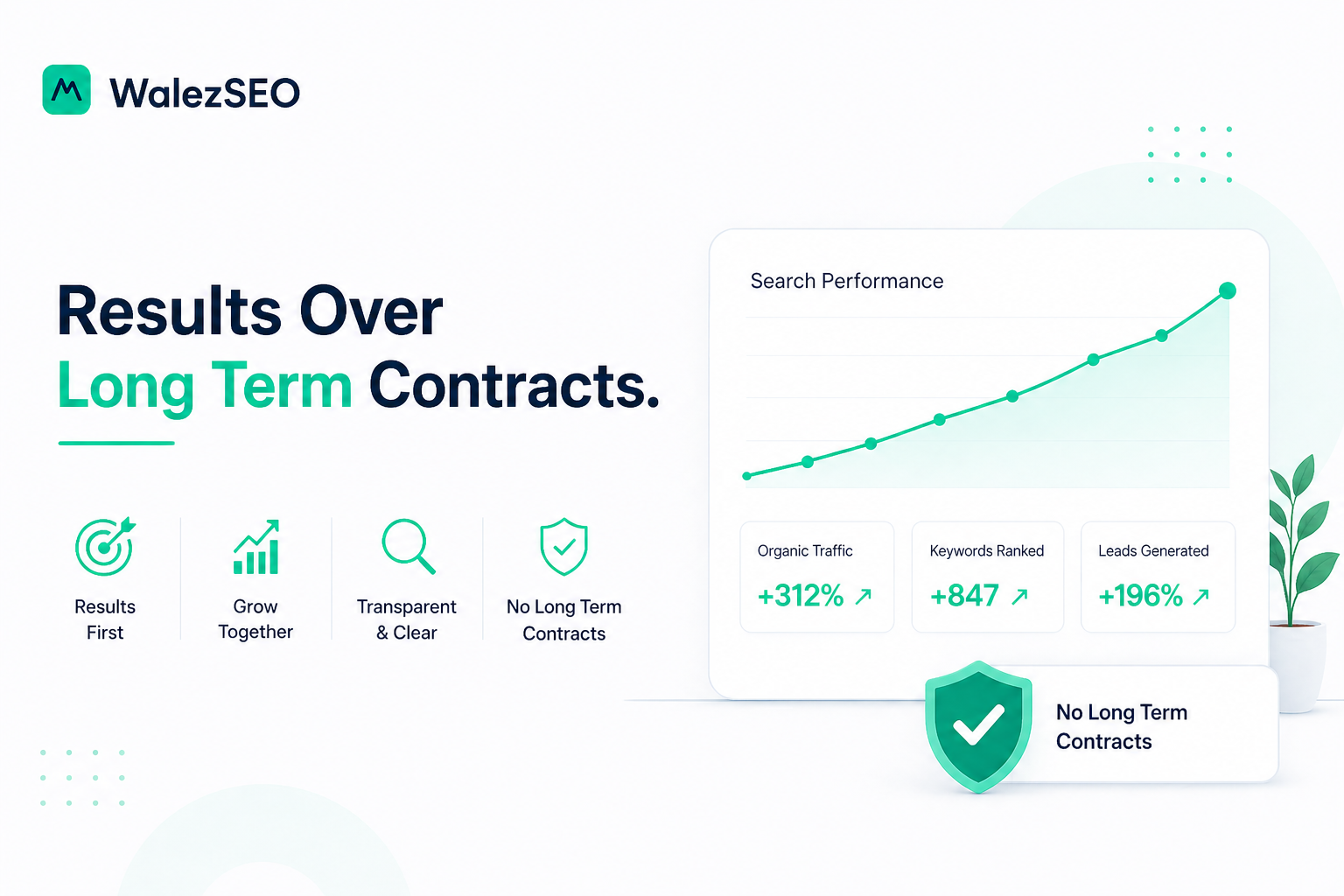
Many UK businesses feel stuck in Long Term SEO Contracts. They pay each month but see little progress. This creates doubt and frustration.
At Walez SEO, we follow a different approach. SEO should deliver results, not lock clients into long agreements. Growth should drive the relationship.
Search performance on Google depends on consistent work and clear strategy. When results improve, clients stay by choice.
This guide explains why long contracts are not required and how a results driven model builds trust and long term growth.
The Problem with Long Term SEO Contracts
Long term SEO contracts often create pressure instead of trust. Many businesses feel stuck in agreements that last months without clear results.
Common problems include:
- You stay locked even if results are slow
- Progress is not clearly explained
- Communication becomes limited
- Focus shifts from performance to contract duration
This creates a gap between expectation and reality.
SEO performance on Google depends on continuous improvement. Results take time, but they should be visible and measurable.
Guidelines from Google Search Central support transparency and user focused work.
At Walez SEO, the focus stays on results, not long commitments. Businesses should stay because growth is visible, not because they are tied to a contract.
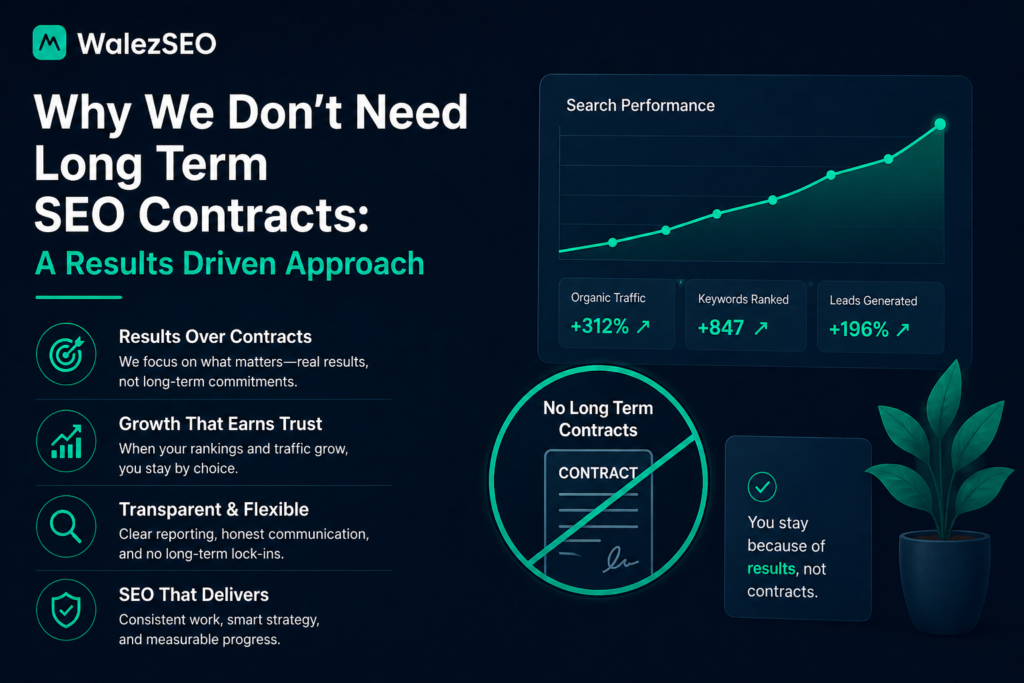
Why SEO Should Be Results Focused
SEO should focus on outcomes, not time. Businesses invest to get growth on Google. Key results to track:
- Traffic growth
- Ranking improvements
- Qualified leads
- Conversions
These metrics show real progress. They connect SEO work to business goals.
A results focused approach sets clear targets and tracks them each month. It adjusts strategy based on data, not assumptions.
Guidance from Google Search Central supports user focused content and measurable improvement.
At Walez SEO, every action links to outcomes. Clients stay because they see steady growth, not because of a contract.
How Results Driven SEO Works
Results-driven SEO focuses on achieving measurable outcomes rather than just completing tasks. Instead of long-term contracts or vague promises, this approach is built around performance, transparency, and continuous improvement.
The process starts with clear goals, such as increasing leads, improving rankings, or boosting website traffic. Every SEO activity is then aligned with these objectives to ensure efforts directly impact business results.
Next, keyword research and competitor analysis are used to identify opportunities with real potential. The focus is on high-intent keywords that can bring qualified traffic, not just random visitors.
Content and on-page optimisation are then implemented to match user intent and improve visibility. At the same time, technical SEO improvements ensure that the website is fast, mobile-friendly, and easy for search engines to crawl.
Performance is tracked regularly using tools like Google Analytics and Google Search Console. This data shows what is working and what needs improvement.
Based on insights, strategies are continuously refined. Low-performing pages are updated, new opportunities are targeted, and ongoing optimisation ensures steady growth.
In simple terms, results-driven SEO is about focusing on actions that lead to real business outcomes, tracking progress, and improving consistently rather than relying on fixed plans or assumptions.
Why Small Businesses Prefer Flexible SEO
Small businesses need control over budget and results. Flexible SEO gives both. It allows steady growth without long term risk.
Key reasons include:
- Better budget control
- Clear monthly results
- Low financial risk
- Easy strategy changes
Flexible plans let businesses adjust based on performance. This keeps spending aligned with results on Google.
Small teams often cannot commit to long contracts. They need proof before scaling investment. Guidance from Google Search Central supports ongoing improvement and user focused strategies.
At Walez SEO, flexible SEO helps businesses grow step by step. Clients stay because they see progress, not because they are tied to a contract.
Does No Contract Mean No Commitment?
No, a no-contract SEO model does not mean a lack of commitment. In fact, it often creates a stronger level of accountability. Without a long-term agreement, agencies must consistently deliver results to retain clients, which keeps the focus on performance rather than promises.
In a no-contract setup, the commitment shifts from paperwork to results. The SEO provider is expected to show progress through improved rankings, increased traffic, and more leads. This creates a working relationship based on trust, transparency, and ongoing value.
For businesses, this approach offers flexibility. You are not locked into a long-term deal and can continue only if you are satisfied with the outcomes. This reduces risk and ensures that your investment is tied directly to performance.
However, it is important to understand that SEO itself still requires time and consistency. Even without a contract, both the business and the agency need to stay committed to the process for long-term success.
In simple terms, no contract does not mean no commitment, it means commitment to results rather than commitment to a fixed agreement.
What to Look for in a Transparent SEO Service
A transparent SEO service focuses on clarity and results. It should help your business grow on Google. Key signs to look for:
- Month to month plans with no lock in
- Clear and simple reporting
- Defined goals and timelines
- Regular communication
- Real case studies with proof
A good provider explains every step. You should understand what work is done and why it matters. They follow safe methods from Google Search Central. This protects your site and builds long term growth.
At Walez SEO, transparency and performance go together. Results remain the main focus.
SEO shouldn’t lock you into long-term contracts, it should deliver measurable results and real business growth. Explore these resources to understand what effective SEO really looks like:
- SEO pricing models explained
- How much SEO costs in the UK
- SEO vs PPC for small businesses
- SEO case study with real results
- Warning signs of a bad SEO agency
FAQs
Are SEO contracts necessary?
No, SEO contracts are not always necessary. In many cases, a flexible approach works better because it focuses on performance rather than long-term commitment. Businesses benefit more when results are consistently delivered instead of being locked into fixed agreements.
What is month-to-month SEO?
Month-to-month SEO is a flexible model where you pay for SEO services on a monthly basis without any long-term contract. This allows businesses to continue only if they are satisfied with the results and progress.
Is no-contract SEO risky?
No, in many situations it is actually less risky. Without a contract, agencies must deliver consistent results to retain clients. This creates accountability and ensures ongoing performance rather than relying on long-term agreements.
Why do agencies use long-term SEO contracts?
Many agencies use long-term contracts to secure predictable revenue. While this can provide stability for the agency, it does not always guarantee results for the client, especially if performance is not regularly monitored or improved.
What is the best SEO model for small businesses?
The best SEO model for small businesses is a flexible, results-driven monthly approach. It allows businesses to test strategies, measure performance, and adjust without being tied into long-term commitments.