
Local SEO helps small businesses show up in Google Search and on Google Maps, putting them in front of people who are actively looking nearby. Better local visibility brings more website visits, phone enquiries, footfall and leads all vital in competitive UK towns and cities. Whether you run a café in Chichester, a plumber in Manchester, or a dental practice in Birmingham, strong local rankings and a well-optimised Google Maps presence can turn searches into customers.
This guide covers what every small business owner in the UK needs to know: how local search works, the role of Google Business Profile, practical on-site and technical fixes, a sensible review strategy, local link-building ideas, and how AI-driven search is changing the game. It also includes hands-on checklists and straightforward commercial advice to help you decide whether to do it yourself or bring in a professional.
Why Local SEO Actually Matters for Small Businesses
Think about the last time you needed a plumber, a florist, or an accountant in a hurry. You probably pulled out your phone and searched. Most people do. And if a business didn’t show up or looked a bit sketchy online you moved on to the next one.
That’s exactly why local SEO matters, especially for small businesses competing against bigger names with bigger budgets.
People search locally before they do anything else
“Near me” searches have grown massively over the past few years, and they’re not slowing down. Someone looking for a birthday cake, an emergency locksmith, or a last-minute gift isn’t browsing for hours they want an answer fast, usually within the next few hours.
Google knows this. That’s why it shows local results at the top, complete with maps, reviews, opening hours, and photos. If your business isn’t there, you’re simply invisible to people ready to spend money right now.
Reviews and ratings do the selling for you
Before most people call or walk in, they’ll check your reviews. A 4.8-star florist with 60 reviews beats a 3.2-star one every time — even if yours is closer. That’s not just about vanity; it’s about trust. People want reassurance before they hand over their money, especially to a business they’ve never used.
A well-maintained Google Business Profile with accurate hours, real photos, and genuine reviews does a lot of the convincing before you’ve even picked up the phone.
The practical difference it makes
Take a high street florist. Ranking for something like “same day flower delivery in [your town]” means picking up real orders on Valentine’s Day, Mother’s Day, or any Thursday when someone’s forgotten an anniversary. Small tweak, real impact.
Or an accountant showing up for “self assessment accountant in London” during January and February that’s catching people at the exact moment they’re stressed, searching, and ready to book someone. You don’t need to chase them with ads; they’re already looking for you.
It pays off over time, without the ad spend
Paid ads stop the moment you stop paying. Local SEO builds gradually, but it compounds. A well-optimised listing and a few good pages on your website can keep bringing in calls and footfall months or years later without a monthly ad bill.
For most small businesses, that’s a much better return than running Google Ads indefinitely.
How Local SEO Actually Works
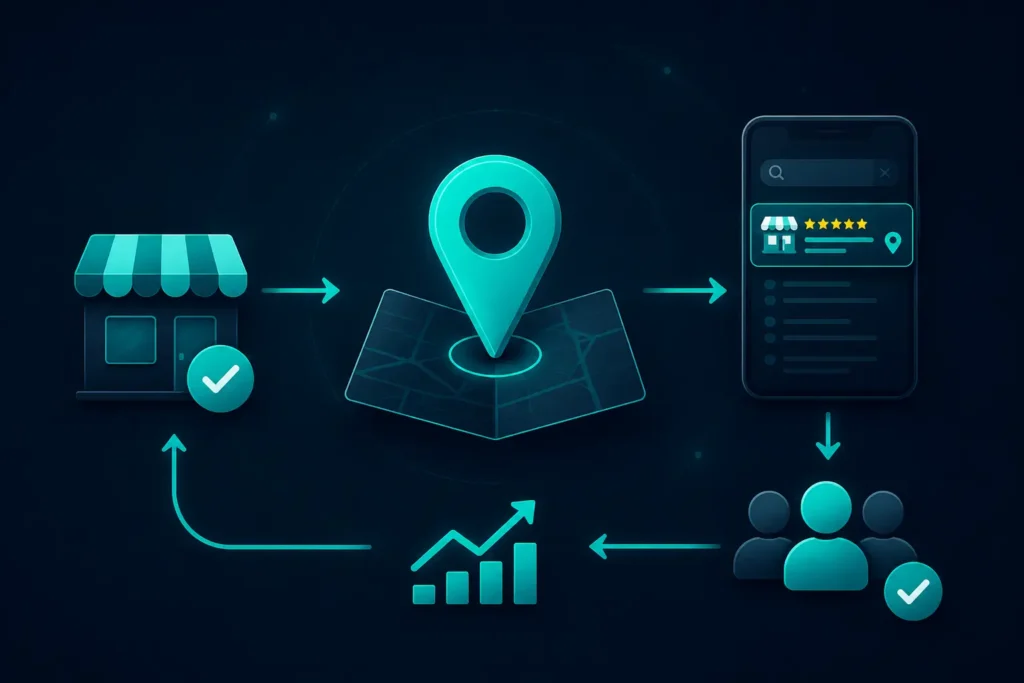
Google doesn’t just pick businesses at random when someone searches locally. It looks at three things: how relevant your business is to what they searched, how close you are to them, and how well-known and trusted your business appears online. Get all three right, and you stand a much better chance of showing up where it counts.
Beyond those core factors, Google also looks at things like your website content, reviews, whether your details are listed consistently across directories, and whether other reputable local sites mention you. All of it feeds into who appears on Maps and in that top cluster of local results.
Your Google Business Profile Is the Starting Point
If you haven’t set up or properly filled out your Google Business Profile, that’s the first thing to sort. It’s free, and it directly affects where you show up on Maps and in local searches.
A few things make a real difference: choose categories that genuinely reflect what you do, write a description that sounds like a human wrote it, and keep your name, address and phone number exactly consistent everywhere online. Even small mismatches a missing “Ltd” or a slightly different phone format can quietly work against you.
Add proper photos of your shop, your team, your work. Businesses with good images get more clicks. Use Google Posts occasionally to share offers or news it signals to Google that your profile is active, not abandoned.
Your Website Still Matters — A Lot
Your Google Business Profile gets people’s attention, but your website is what convinces them to actually get in touch. The two work together, so it’s worth getting both right.
If you serve more than one area, create a separate page for each location rather than cramming everything onto one page. A roofing company covering Brighton, Worthing and Eastbourne will do far better with individual pages for each written properly, not just the same content with the town name swapped out. Google can tell the difference.
Use headings and page titles that reflect what people actually search for. “Roof repairs in Brighton” or “emergency locksmith Birmingham” that kind of natural, specific language works much better than vague service descriptions. And make sure your address, phone number and opening hours are easy to find, ideally on every page.
Link your pages together sensibly too. If your homepage has the most authority, use it to point toward your service and location pages it passes relevance through the site and helps Google understand what you do and where.
Technical SEO: The Stuff Running in the Background
You don’t need to be a developer to understand why this matters. If your site loads slowly, looks broken on a phone, or isn’t secure, people leave and Google notices.
Most local searches happen on mobile, so your site needs to work properly on a small screen. HTTPS is non-negotiable now; it’s a basic trust signal. Adding structured data essentially labels that tell Google your business type, hours and location helps your listing appear more accurately in search results.
Clean URLs, a proper sitemap, and pages Google can actually crawl round it all off. None of it is glamorous, but it all adds up.
Reviews: Your Most Visible Trust Signal
Most people check reviews before they commit to a local business. A steady flow of genuine, recent reviews tells Google your business is active and trusted and it tells potential customers the same thing.
You don’t need hundreds of them. You need real ones, coming in regularly. The easiest way to get them is simply to ask after a job well done, at the end of a receipt, or in a follow-up message with a direct link to your review page. Make it as easy as one tap.
Always respond to reviews, good and bad.
Finding the Right Local Keywords
Think about how your customers actually talk, not how you’d describe your own services. Someone needing a plumber in a hurry isn’t typing “residential plumbing services” they’re typing “emergency plumber Manchester” or “boiler repair near me.”
Mix location with service and intent. “Dentist near me,” “same day dry cleaning Brighton,” “cheap driving lessons SW19” these are the phrases worth targeting. Google’s own autocomplete suggestions and the “People Also Ask” boxes are genuinely useful for finding what real people are searching.
Start with specific, lower-competition phrases. They’re easier to rank for and often bring in more motivated customers anyway.
Building Local Links That Actually Count
A mention from your local newspaper, council website, or a respected trade directory carries real weight. Getting listed on Yell or your local chamber of commerce is a straightforward start but don’t stop there.
Sponsor a community event, collaborate with nearby businesses, or write something genuinely useful that local blogs might reference. These things take a little effort but earn links naturally, which is exactly what Google rewards.
Quality always beats quantity here. One link from a trusted local source is worth far more than twenty from obscure directories.
Mobile Comes First
Most local searches happen on a phone, often while someone’s out and about. If your site is slow, hard to navigate, or buries your phone number, people won’t hang around. A click-to-call button, a fast-loading page, and a clear “get in touch” prompt above the fold these small things make a real difference to whether someone contacts you or moves on.
Running Multiple Locations
If your business operates from more than one address, treat each location as its own presence. A separate Google Business Profile, a dedicated page on your website, and content that actually reflects that area not a copy-paste job with the town name swapped. Google spots thin duplicate content quickly, and so do customers.
Mistakes Worth Avoiding
The most common issues we see: mismatched business details across directories, ignoring reviews entirely, keyword-stuffing a GBP description until it reads like a robot wrote it, and location pages that say nothing useful. Any one of these quietly undermines everything else you’re doing.
Quick Local SEO Checklist
- Complete your GBP fully categories, photos, description, hours
- Check your name, address and phone number match everywhere
- Ask customers for reviews and actually respond to them
- Build location and service pages with real, useful content
- Add structured data so Google understands your business properly
- Make sure your site works well on mobile and loads quickly
How Long Does It Take?
Honestly, it depends. In a smaller town with less competition, you might see meaningful movement within three to six months. In a busy city market, or if you’re starting from scratch, expect six to twelve months before it really compounds. The businesses that do it consistently keeping their profile active, collecting reviews, adding useful content are the ones that pull ahead.
Is It Worth It?
For most small businesses, yes especially compared to paying for ads indefinitely. Paid clicks stop the moment your budget runs out. A well-optimised local presence keeps working in the background, bringing in calls and enquiries without a recurring cost attached to every single lead. Over time, that gap in cost-per-customer becomes quite significant.
AI Search and What’s Changing
Search is shifting. Google’s AI Overviews now summarise local options directly in results, often pulling from your Business Profile, Maps listing, and website content sometimes without the user ever clicking through.
Voice search is growing too. People ask their phones full questions: “find an open pizza place near me now” not keywords, actual sentences. Your content needs to match how people naturally speak, not just how they type.
The businesses that will do well in this environment are the ones with complete, accurate, well-structured information. Structured data, thorough GBP profiles, clear service descriptions these make it easier for AI systems to understand and confidently surface your business.
This isn’t something to worry about. It’s just a reason to do the basics properly.
When It Makes Sense to Get Help
Local SEO isn’t a one-off task. Listings drift out of date, reviews need responding to, content needs updating, and technical issues creep in. For most business owners, it’s simply not where their time is best spent.
A good local SEO agency handles all of this setup, citations, content, reporting and keeps things moving consistently. That consistency, over months and years, is usually what separates businesses that rank from those that don’t.
Ready to improve your local visibility and attract more customers? Book a free consultation with our team to identify quick SEO wins and build a strategy tailored to your business goals. Explore our related services:
- Get a detailed free website SEO audit
- Discover our local SEO services for small businesses
- Improve performance with advanced technical SEO solutions
- Strengthen rankings through professional on-page SEO optimisation
FAQs
Is it worth it for small businesses?
For most, yes. It attracts people already looking for what you offer, at a lower ongoing cost than paid ads — and unlike PPC, the results don’t vanish the moment you stop spending.
How long does it take?
Typically three to six months for meaningful movement, longer in competitive city markets. It depends on your current starting point and how consistently you implement improvements.
How much does local SEO cost in the UK?
DIY costs mainly your time. Agency packages generally start from a few hundred pounds a month, scaling with scope and location. Compare that against what two or three new customers a month is actually worth to your business.
Can I do it myself?
A lot of it, yes completing your profile, asking for reviews, fixing inconsistent listings, adding local content. Technical fixes and link building are where most people benefit from outside help.
Does local SEO still work in 2026?
Absolutely. Local search intent remains strong, and AI has made accurate, well-structured local information more important than ever.
Conclusion
Local SEO for small businesses in the UK is a practical, high-value way to attract nearby customers, increase enquiries and build a steady stream of footfall and leads. Start with a fully optimised Google Business Profile, make your website location-friendly, collect and manage reviews, and invest in local citations and links. Monitor progress, iterate, and consider agency support if you lack time or technical expertise.